
Arunachaleswarar Temple, Tiruvannamalai: History, Legends, Girivalam & Timings
Scooplist | History & Culture
The Arunachaleswarar Temple in Tiruvannamalai, Tamil Nadu, is one of India’s most revered Shiva temples, famous for the sacred Arunachala Hill, the grand Karthigai Deepam festival and the 14-kilometre Girivalam pilgrimage.
Also known as Annamalaiyar Temple, it is one of the five Pancha Bhoota Sthalams, representing Agni (fire).
Here, devotees believe Lord Shiva manifested as an infinite column of fire before taking the form of Arunachala Hill.
From this powerful legend to its magnificent Dravidian architecture and centuries-old traditions, here’s everything you need to know about Tiruvannamalai’s sacred heritage.
Arunachaleswarar Temple: Key Facts
| Detail | Information |
|---|---|
| Location | Tiruvannamalai, Tamil Nadu |
| Main deity | Lord Arunachaleswarar (Shiva) |
| Goddess | Unnamulai Amman (Parvati) |
| Sacred element | Agni (Fire) |
| Architecture | Dravidian |
| Temple area | Approximately 25 acres |
| Rajagopuram height | Approximately 66 metres |
| Temple enclosures | Five prakarams |
| Girivalam distance | Approximately 14 km |
| Major festival | Karthigai Deepam |
| General entry | Free |
The Legend of Arunachala: When Shiva Became Fire
According to Hindu tradition, Lord Brahma and Lord Vishnu once argued over who was supreme.
To resolve their dispute, Lord Shiva appeared before them as an infinite pillar of fire, known as Jyoti Sthambha.
Shiva challenged them to discover either end of the fiery column.
Lord Vishnu transformed into a boar, Varaha, and travelled downward searching for its base. Lord Brahma became a swan and flew upward seeking its summit.
Neither could find an end.
Vishnu admitted his inability to complete the search, while Brahma falsely claimed success, using a Ketaki flower as evidence.
According to the legend, Shiva condemned Brahma’s dishonesty and praised Vishnu’s humility.
The infinite column of divine light then manifested as Arunachala Hill, symbolising Shiva’s eternal presence.
This sacred story is commemorated during the annual Karthigai Deepam festival.
Why Is Arunachala Hill Sacred?
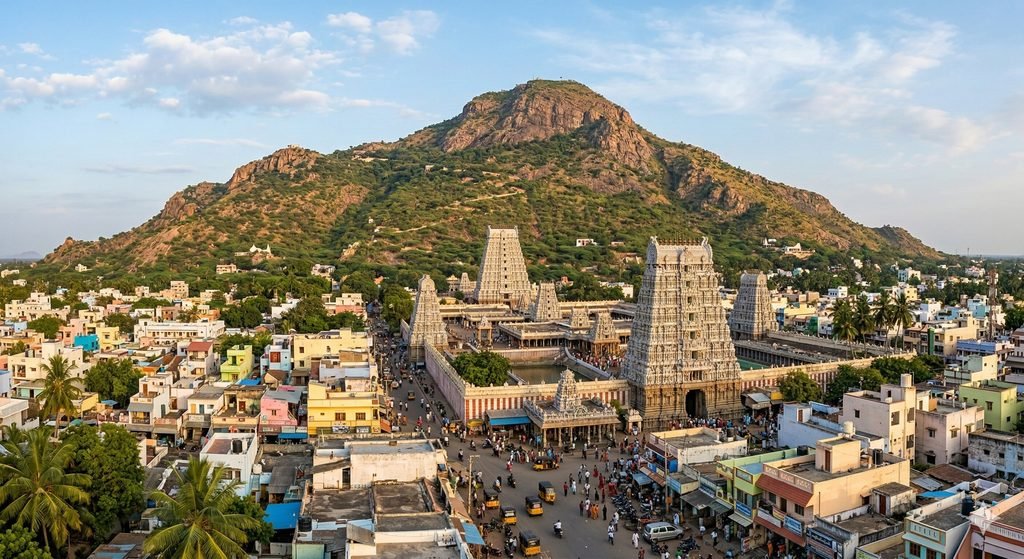
Arunachala Hill rises approximately 800 metres above sea level and dominates the landscape surrounding Tiruvannamalai.
The Sanskrit name Arunachala combines Aruna, associated with reddish light or dawn, and Achala, meaning immovable mountain.
In Shaiva tradition, the hill itself is revered as a manifestation of Lord Shiva.
This belief gives Tiruvannamalai a distinctive spiritual identity: devotees worship not only the temple’s Shiva Lingam but also the mountain as a sacred presence.
History of Arunachaleswarar Temple
The Arunachaleswarar Temple developed over several centuries through the contributions of South Indian dynasties.
Its early religious importance is reflected in the Tamil Shaiva hymns of the seventh-century saints Appar and Sambandar.
Chola Dynasty
The Cholas made important contributions to the temple’s early stone structures, religious endowments and daily worship traditions.
Their inscriptions record donations of land, livestock and resources for maintaining temple rituals.
Hoysala and Vijayanagara Periods
The Hoysalas contributed to the region’s medieval history, while the Vijayanagara Empire substantially expanded the temple complex.
Krishnadevaraya, who ruled from 1509 to 1529 CE, was an important patron associated with the towering eastern Rajagopuram and Thousand-Pillared Hall.
The Rajagopuram was completed during the later Nayaka period.
Today, the temple is administered by the Tamil Nadu Hindu Religious and Charitable Endowments Department.
Arunachaleswarar Temple Architecture
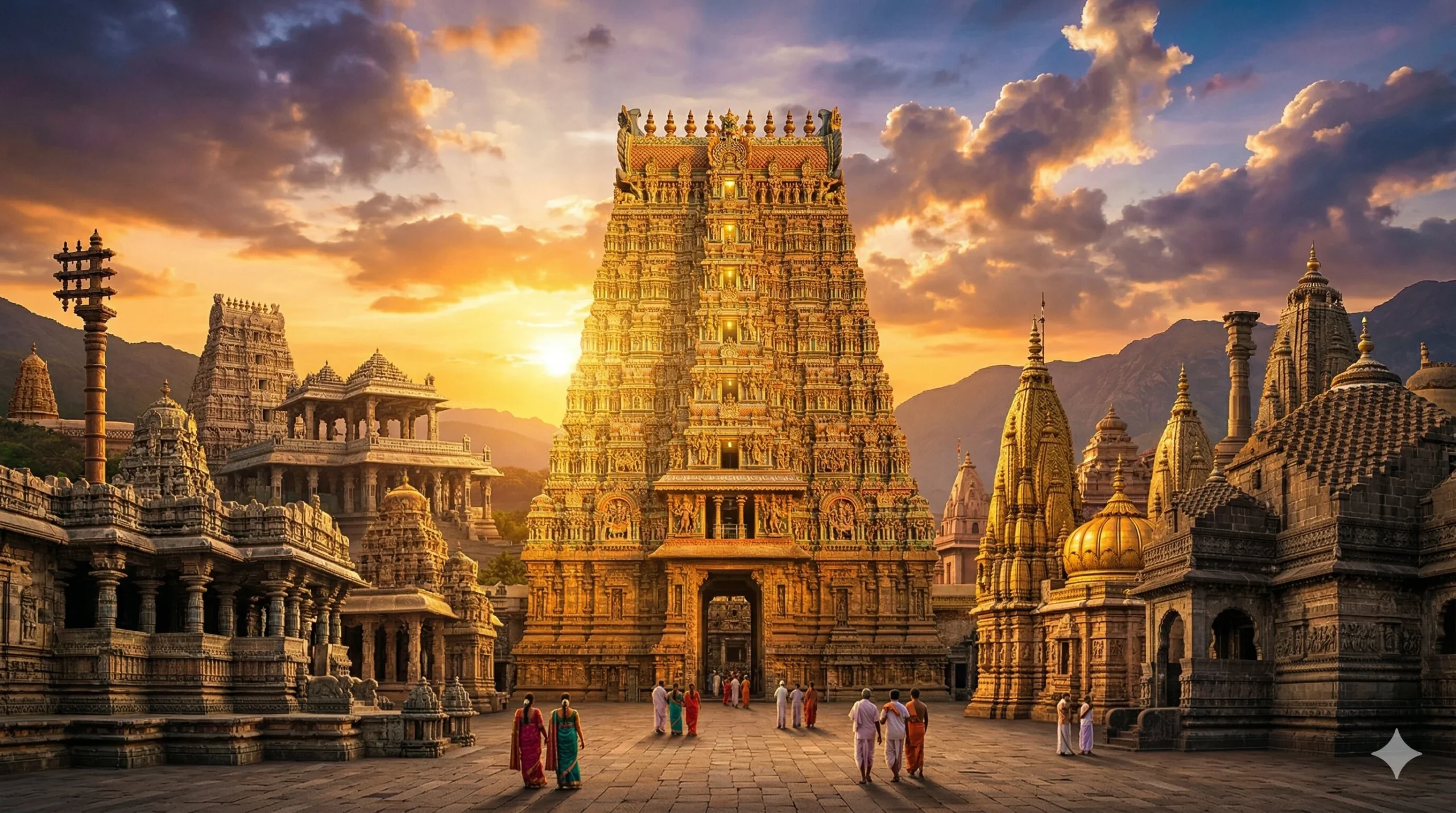
Covering approximately 25 acres, the temple is one of Tamil Nadu’s major Dravidian architectural complexes.
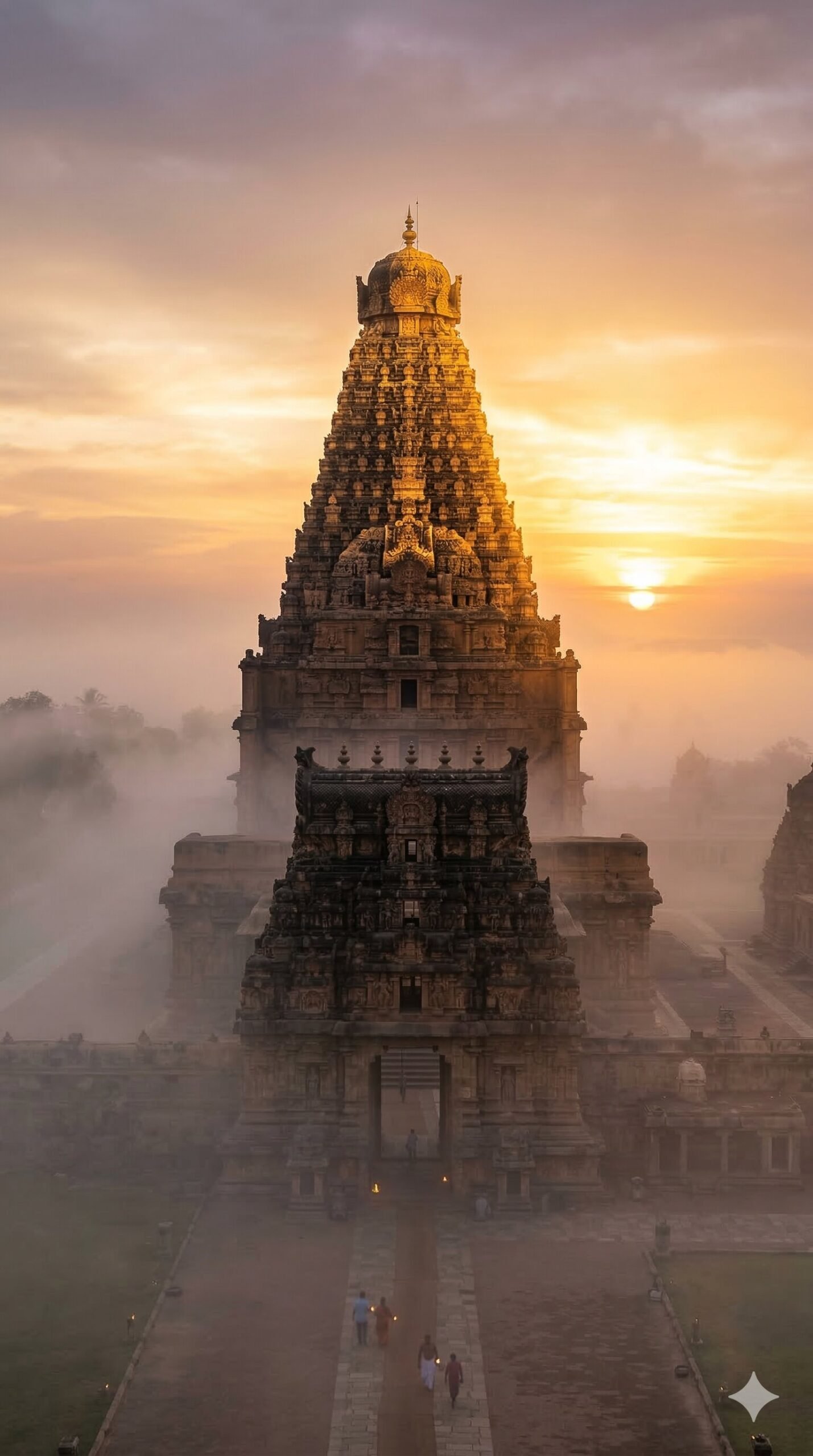
The 66-Metre Rajagopuram
The eastern Rajagopuram rises approximately 66 metres (217 feet) and features eleven tiers decorated with intricate architectural details and sculptures.
It is among Tamil Nadu’s tallest historic temple gateways.
Five Sacred Prakarams
The temple contains five concentric enclosures, or prakarams, with numerous shrines, mandapams and sacred spaces.
The inner sanctum houses Lord Arunachaleswarar, while Goddess Unnamulai Amman has a separate important shrine.
Thousand-Pillared Hall
The magnificent Thousand-Pillared Hall reflects Vijayanagara-period craftsmanship and features elaborately sculpted columns.
Pathala Lingam
The underground Pathala Lingam shrine is associated with the early spiritual life of Ramana Maharshi, who meditated here after arriving in Tiruvannamalai in 1896.
Pancha Bhoota Sthalams: Five Elements of Shiva
Arunachaleswarar Temple is one of the five sacred Shiva temples associated with the elements of Hindu cosmology.
| Element | Temple | Location |
|---|---|---|
| Earth | Ekambareswarar Temple | Kanchipuram |
| Water | Jambukeswarar Temple | Tiruvanaikaval |
| Fire | Arunachaleswarar Temple | Tiruvannamalai |
| Air | Srikalahasteeswara Temple | Srikalahasti |
| Space | Nataraja Temple | Chidambaram |
Tiruvannamalai represents Agni, the divine element of fire, connecting the temple directly with Shiva’s infinite-flame legend.
Karthigai Deepam: The Festival of the Sacred Flame
Karthigai Deepam is Tiruvannamalai’s most celebrated religious festival, generally held during November or December.
Its most significant moment is the lighting of the Maha Deepam, a massive ceremonial flame atop Arunachala Hill.
The flame symbolises the infinite column of fire associated with Lord Shiva.
Large numbers of pilgrims gather in Tiruvannamalai to witness the lighting ceremony, participate in temple rituals and undertake Girivalam.
The festival attracts enormous crowds, so accommodation, transport and darshan arrangements should be planned well in advance.
Girivalam: The Sacred 14-Kilometre Walk
Girivalam, also called Giri Pradakshina, is the traditional clockwise circumambulation of Arunachala Hill.
The route covers approximately 14 kilometres and is especially popular during Pournami, or full-moon days.
Devotees traditionally complete the walk barefoot while chanting prayers and visiting shrines along the route.
Eight Sacred Lingams Along Girivalam
The pilgrimage route includes eight Shiva Lingams associated with the eight directions:
- Indra Lingam
- Agni Lingam
- Yama Lingam
- Niruthi Lingam
- Varuna Lingam
- Vayu Lingam
- Kubera Lingam
- Esanya Lingam
Girivalam Travel Tips
- Allow approximately 4–6 hours for the walk, depending on fitness and crowds.
- Begin early in the morning or during cooler hours.
- Carry drinking water and take breaks when necessary.
- Avoid peak afternoon heat.
- Wear suitable footwear if walking barefoot is uncomfortable or unsafe.
- Follow local traffic restrictions and designated pedestrian routes.
According to devotional belief, Girivalam encourages spiritual purification, reflection and devotion to Lord Shiva.
Saints and Spiritual Leaders Associated with Tiruvannamalai
Tiruvannamalai has inspired several important figures in Tamil spiritual history.
Appar and Sambandar: Seventh-century Nayanar saints whose Thevaram hymns celebrate Lord Annamalaiyar.
Manikkavacakar: Revered Shaiva poet associated with the devotional Thiruvempavai hymns.
Arunagirinathar: The celebrated Tamil poet-saint associated with Lord Murugan and the Thiruppugazh.
Ramana Maharshi: The modern spiritual teacher who arrived in Tiruvannamalai in 1896 and became internationally known for his teachings on self-inquiry.
Ramana Maharshi’s connection with Arunachala continues to attract spiritual seekers from around the world.
Other Major Festivals at Arunachaleswarar Temple
Apart from Karthigai Deepam, the temple celebrates several important festivals.
Maha Shivaratri: Devotees worship Lord Shiva through special prayers, fasting and night-long observances.
Pournami Girivalam: Large numbers of pilgrims circumambulate Arunachala Hill every full moon.
Thiruvoodal: A traditional festival celebrating a symbolic divine disagreement and reconciliation between Lord Shiva and Goddess Parvati.
These festivals preserve the temple’s rich Shaiva traditions and cultural heritage.
Arunachaleswarar Temple Timings and Visitor Information
| Detail | Information |
|---|---|
| Regular darshan | 5:30 AM–8:00 PM |
| Last entry on crowded days | May close around 7:30 PM |
| General darshan | Free |
| Special darshan | Subject to official availability |
| Ideal visit duration | 1–3 hours, excluding long queues |
| Best season | November–February |
The above regular timings are published by the Tamil Nadu HR&CE Department. Special rituals and festivals may affect access.
Official website: https://annamalaiyar.hrce.tn.gov.in/
How to Reach Tiruvannamalai
By road: Tiruvannamalai is approximately 190 km from Chennai and can be reached by buses, taxis or private vehicles.
By train: Tiruvannamalai Railway Station connects the town with regional railway services.
By air: Chennai International Airport is a major airport option, followed by onward road travel.
Places to Visit Near Arunachaleswarar Temple
Sri Ramanasramam: The ashram associated with Ramana Maharshi, featuring meditation spaces, his samadhi shrine and a library.
Virupaksha Cave: A historic meditation site on Arunachala Hill where Ramana Maharshi lived for several years.
Skandashramam: A peaceful hillside hermitage associated with Ramana Maharshi, offering scenic views of Tiruvannamalai.
Seshadri Swamigal Ashram: A spiritual centre dedicated to the revered saint Seshadri Swamigal.
Gingee Fort: A historic hill fortress located approximately 35–40 km from Tiruvannamalai.
Check hill-trail access restrictions before visiting caves or hermitages.
Frequently Asked Questions
Why is Arunachaleswarar Temple famous?
The temple is famous for its association with Shiva’s infinite column of fire, sacred Arunachala Hill, Karthigai Deepam festival and 14-km Girivalam pilgrimage.
What is the significance of Arunachala Hill?
In Shaiva tradition, Arunachala Hill is worshipped as a physical manifestation of Lord Shiva, representing the element of fire.
How long is Tiruvannamalai Girivalam?
The traditional Girivalam route is approximately 14 kilometres and generally takes 4–6 hours to complete.
What are Arunachaleswarar Temple’s opening hours?
The temple’s official regular darshan hours are 5:30 AM to 8:00 PM, with possible changes during festivals and crowded periods.
Who built Arunachaleswarar Temple?
The temple was developed over centuries, with important contributions from the Cholas, Hoysalas, Vijayanagara rulers and Nayakas.
What is the best time to visit Tiruvannamalai?
November to February generally offers comfortable weather. Karthigai Deepam is particularly significant for pilgrims, but attracts very large crowds.
Conclusion
The Arunachaleswarar Temple at Tiruvannamalai is a remarkable blend of sacred mythology, Dravidian architecture and living spiritual traditions.
From Shiva’s infinite pillar of fire to the towering Rajagopuram, Karthigai Deepam celebrations and the peaceful Girivalam path, every part of Tiruvannamalai reflects centuries of devotion.
Whether you’re a pilgrim, history enthusiast or cultural traveller, Arunachala offers an extraordinary connection to Tamil Nadu’s spiritual heritage.
Have you experienced Girivalam or witnessed Karthigai Deepam? Share your experience in the comments!
Explore more stories about Indian temples, mythology, history and sacred traditions on Scooplist.
Sources and References
- Tamil Nadu HR&CE – Arunachaleswarar Temple – Official timings, temple details and visitor information.
- Tiruvannamalai District – Places of Interest – Temple history, architecture and royal contributions.
- Tiruvannamalai District – Girivalam – Official 14-km route and significance.
- Tiruvannamalai District – Karthigai Festival – Festival history and traditions.
- Sri Ramanasramam – Ramana Maharshi Timeline – Historical biography and spiritual life.
- Sri Ramanasramam – Visitor Information – Virupaksha Cave, Skandashramam and ashram facilities.
Editorial note: Sacred legends and spiritual beliefs are presented as religious traditions. Historical details and visitor guidance are based on available official records. Timings and access arrangements may change.