

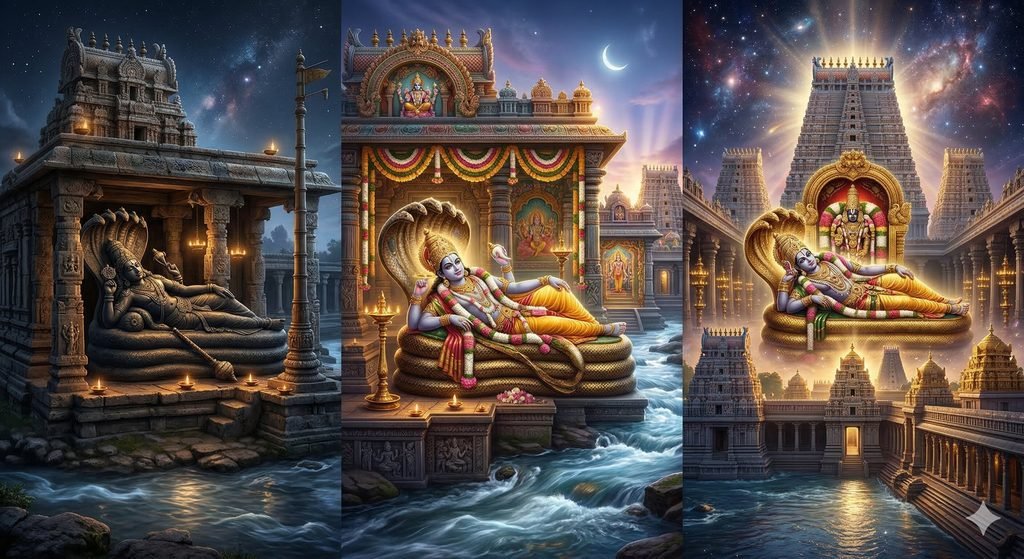
Triranga Darshan: Complete Guide to 3 Sacred Ranganatha Temples
Triranga Darshan, also known as Triranga Darshanam, is a sacred Hindu pilgrimage connecting three historic Ranganathaswamy temples along the Kaveri River in Karnataka and Tamil Nadu.
The pilgrimage honours Lord Ranganatha, the reclining form of Lord Vishnu, through three sacred shrines: Adi Ranga at Srirangapatna, Madhya Ranga at Shivanasamudra and Antya Ranga at Srirangam.
According to regional Vaishnava tradition, visiting all three temples in a single day, particularly during Dhanurmasa, is considered spiritually auspicious.
This guide explains the temples’ history, legends, significance, visiting hours and practical pilgrimage route.
What Is Triranga Darshan?
Triranga Darshan refers to a pilgrimage involving three important temples dedicated to Lord Ranganatha along the Kaveri River.
The three sacred shrines are:
- Adi Ranga: Sri Ranganathaswamy Temple, Srirangapatna, Karnataka.
- Madhya Ranga: Sri Ranganathaswamy Temple, Shivanasamudra, Karnataka.
- Antya Ranga: Sri Ranganathaswamy Temple, Srirangam, Tamil Nadu.
All three are situated on islands associated with the Kaveri River, which is revered in Hindu tradition as Dakshina Ganga, or the Ganga of the South.
Lord Ranganatha is depicted reclining upon the cosmic serpent Adishesha in a state of Yoga Nidra, symbolising divine preservation, peace and cosmic balance.
1. Adi Ranga – Sri Ranganathaswamy Temple, Srirangapatna
Location: Srirangapatna, Mandya District, Karnataka
Adi Ranga is the first of the three sacred Ranganatha temples when travelling downstream along the Kaveri.
Located on a river island near Mysuru, this historic temple is associated with more than a thousand years of Vaishnava worship.
History and Significance
An inscription dated 894 CE records the establishment of the temple under the Western Ganga period.
The temple later received architectural contributions from the Hoysalas, Vijayanagara rulers and Mysore Wodeyars.
The presiding deity, Lord Ranganatha, reclines on the seven-headed Adishesha.
The Archaeological Survey of India protects the monument for its historical and architectural importance.
Visitor Information
- Timings: 7 AM–1:30 PM and 4 PM–8:30 PM.
- General entry: Free.
- Distance: Approximately 15–20 km from Mysuru.
- Best time: Early morning.
- Travel tip: Combine your visit with Srirangapatna Fort and other nearby heritage sites.
2. Madhya Ranga – Sri Ranganathaswamy Temple, Shivanasamudra
Location: Shivanasamudra, Chamarajanagara District, Karnataka
Madhya Ranga is the second sacred shrine in the Triranga pilgrimage.
Situated on an island formed by the Kaveri River, the temple is close to the famous Shivanasamudra waterfalls.
History and Significance
The presiding deity is worshipped as Madhya Ranga, also known as Jaganmohana Ranganatha.
Temple traditions associate the shrine with ancient Vaishnava worship and the blessings of Lord Vishnu.
The surrounding landscape is particularly scenic because of the Kaveri’s dramatic waterfalls and forested terrain.
Unlike the monumental Srirangam complex, Madhya Ranga offers a comparatively peaceful temple experience.
Visitor Information
- Timings: 7:30 AM–1 PM and 2:30 PM–8:30 PM.
- General darshan: Free.
- Distance: Approximately 70–75 km from Srirangapatna.
- Best time: Morning.
- Travel tip: Visit the temple before exploring Gaganachukki and Bharachukki waterfalls. Swimming near the falls is unsafe and prohibited in restricted areas.
3. Antya Ranga – Sri Ranganathaswamy Temple, Srirangam
Location: Srirangam, Tiruchirappalli District, Tamil Nadu
Antya Ranga is the final and most monumental shrine of the Triranga pilgrimage.
Located on an island between the Kaveri and Kollidam rivers, Srirangam is one of the most important centres of Sri Vaishnavism.
History and Architectural Significance
The temple complex covers approximately 156 acres, making it one of the world’s largest functioning Hindu temple complexes.
Its outstanding architectural features include:
- Seven concentric enclosures called prakarams.
- Twenty-one monumental gopurams.
- An approximately 72-metre-high Rajagopuram.
- Historic mandapams, sculptures and sacred temple tanks.
Srirangam is regarded as the foremost among the 108 Divya Desams and is closely associated with the philosopher-saint Ramanujacharya.
The temple was added to UNESCO’s World Heritage Tentative List in 2014.
Visitor Information
- Timings: Generally 6 AM–9 PM, with scheduled closures for rituals.
- General entry: Free; special darshan options may be available.
- Nearest major city: Tiruchirappalli.
- Ideal duration: 2–4 hours.
- Travel tip: Check the official daily darshan schedule and allow extra time during festivals and weekends.
The Sacred Legend of Lord Ranganatha and Vibhishana
According to the traditional Srirangam temple legend, the sacred idol of Lord Ranganatha originally belonged to Lord Brahma and was later worshipped by King Ikshvaku’s descendants.
After defeating Ravana, Lord Rama gifted the idol to Vibhishana, Ravana’s younger brother, as a symbol of gratitude.
During Vibhishana’s journey to Lanka, the idol was placed at Srirangam and remained there permanently.
Lord Ranganatha is traditionally believed to face south towards Lanka, blessing Vibhishana and his kingdom.
This legend forms an important part of Srirangam’s sacred identity and its connection with the Ramayana.
Why Is Triranga Darshan Spiritually Significant?
Triranga Darshan connects three sacred representations of Lord Ranganatha through the Kaveri River.
In regional devotional tradition, the three shrines symbolise a spiritual progression:
- Adi Ranga: The beginning or primordial manifestation.
- Madhya Ranga: The middle manifestation, associated with divine beauty.
- Antya Ranga: The final manifestation, representing spiritual fulfilment.
Some devotees associate completing all three darshans in a single day with Brahmanda Darshanam, understood as a spiritually complete experience.
These are religious beliefs and pilgrimage traditions, rather than historically verifiable outcomes.
Why Is Dhanurmasa Important for Triranga Darshan?
Dhanurmasa, associated with the Tamil month of Margazhi, generally falls between mid-December and mid-January.
It is considered especially auspicious for worshipping Lord Vishnu.
During this period, temples conduct special early-morning rituals, devotional chanting and recitations of Andal’s Tiruppavai.
The Triranga pilgrimage is particularly popular during Dhanurmasa because early worship arrangements may help devotees attempt all three temples in one day.
However, special opening hours vary by temple and date. Confirm the schedule before travelling.
Triranga Darshan Route From Bengaluru
The traditional pilgrimage follows this sequence:
Bengaluru → Srirangapatna (Adi Ranga) → Shivanasamudra (Madhya Ranga) → Srirangam (Antya Ranga)
Suggested Route and Approximate Distances
| Journey | Approximate Distance |
|---|---|
| Bengaluru to Srirangapatna | 125–135 km |
| Srirangapatna to Shivanasamudra | 70–80 km |
| Shivanasamudra to Srirangam | Varies significantly by road route |
| Total pilgrimage drive | Approximately 500–600 km, route-dependent |
Can Triranga Darshan Be Completed in One Day?
Yes, some devotees undertake the traditional single-day pilgrimage, especially during Dhanurmasa. However, it is a demanding road journey and completion before sunset cannot be guaranteed.
Temple queues, special ritual schedules, traffic, weather and route conditions can all affect the plan.
For pilgrims attempting the one-day observance:
- Confirm early-morning darshan at Srirangapatna before departure.
- Visit Madhya Ranga as early as possible.
- Travel directly towards Srirangam, allowing several hours for the intercity journey.
- Check Srirangam’s darshan slots in advance.
- Arrange an overnight stay in Tiruchirappalli rather than driving back immediately.
Recommended alternative: Spread the pilgrimage across two days for a more comfortable experience, particularly when travelling with children or older family members.
Triranga Darshan: Temple Comparison
| Temple | State | Sacred Identity | Main Highlight |
|---|---|---|---|
| Srirangapatna | Karnataka | Adi Ranga | Historic island temple |
| Shivanasamudra | Karnataka | Madhya Ranga | Peaceful riverside shrine |
| Srirangam | Tamil Nadu | Antya Ranga | Monumental temple complex |
Essential Tips for Triranga Pilgrims
- Wear modest clothing appropriate for temple worship.
- Verify darshan timings and special-entry arrangements directly with temple authorities.
- Carry drinking water, snacks and necessary medicines.
- Avoid rushing or speeding to meet a religious deadline.
- Check road and weather conditions, especially during monsoon.
- Plan accommodation around Tiruchirappalli or Srirangam.
- Respect temple photography and entry restrictions.
- Avoid swimming or bathing in dangerous river sections.
Frequently Asked Questions
What are the three temples of Triranga Darshan?
The three temples are Adi Ranga at Srirangapatna, Madhya Ranga at Shivanasamudra and Antya Ranga at Srirangam.
Can Triranga Darshan be completed in one day?
It is traditionally undertaken in one day, particularly during Dhanurmasa. However, long travel distances and variable temple schedules make careful planning essential.
Which is the first Ranga temple?
Sri Ranganathaswamy Temple at Srirangapatna is traditionally known as Adi Ranga.
Which is the largest Triranga temple?
Sri Ranganathaswamy Temple at Srirangam is the largest, occupying approximately 156 acres.
Are all three Ranga temples Divya Desams?
No. Srirangam belongs to the canonical 108 Divya Desams, while Srirangapatna and Shivanasamudra are not included in that standard list.
What is the best time for Triranga Darshan?
Dhanurmasa, generally occurring between mid-December and mid-January, is especially significant in the regional pilgrimage tradition.
Conclusion
Triranga Darshan is a remarkable spiritual journey connecting three ancient Ranganatha temples through the sacred Kaveri River.
From the historic Adi Ranga shrine at Srirangapatna to the peaceful Madhya Ranga temple at Shivanasamudra and the magnificent Antya Ranga complex at Srirangam, each destination reflects South India’s enduring Vaishnava heritage.
Whether completed in a single day or explored at a relaxed pace, this pilgrimage offers a meaningful connection with temple history, architecture and devotional traditions.
Have you completed Triranga Darshan? Share your pilgrimage experience in the comments!
Discover more Indian temple stories, spiritual traditions and pilgrimage guides on Scooplist.
Sources and References
- Karnataka Tourism – Ranganathaswamy Temple, Srirangapatna – Adi Ranga and temple heritage.
- UNESCO – Monuments of Srirangapatna Island Town – Historical records and temple origins.
- Karnataka HRCE – Madhya Ranga Temple – Official opening hours and worship information.
- UNESCO – Sri Ranganathaswamy Temple, Srirangam – Architectural heritage and tentative status.
- Deccan Herald – The Triranga Yatra Is Thrice as Nice – Regional single-day pilgrimage tradition.
- 108 Divya Desams – Temple Listings – Traditional Divya Desam classification.
Editorial note: Temple legends and spiritual benefits are presented as devotional beliefs. Timings, travel conditions and special-entry fees may change; confirm them with the respective temple authorities before visiting.