

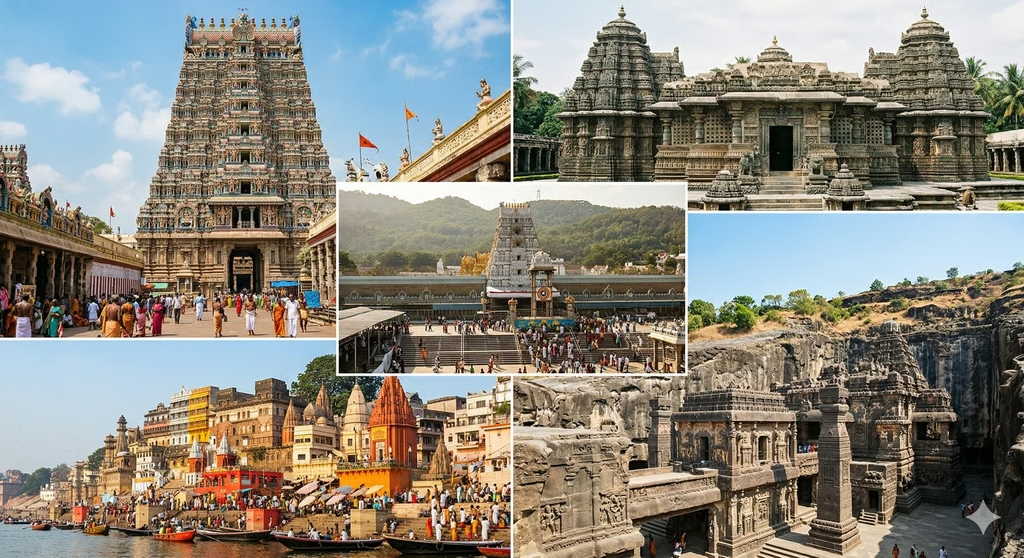
5 Indian States Famous for Their Temples: History, Architecture and Sacred Heritage
India is home to an extraordinary collection of Hindu temples, reflecting centuries of devotion, architectural innovation and cultural heritage. From Tamil Nadu’s magnificent Dravidian gopurams to Karnataka’s intricate Hoysala carvings, every region offers a unique spiritual experience.
Among India’s most remarkable temple destinations are Tamil Nadu, Karnataka, Andhra Pradesh, Uttar Pradesh and Maharashtra. These five states are celebrated for their ancient shrines, sacred pilgrimage centres, UNESCO-recognised monuments and living religious traditions.
Let’s explore their most famous temples, historical significance and architectural wonders.
How Many Temples Are There in India?
India has hundreds of thousands of Hindu temples, ranging from monumental complexes to small village shrines.
Some widely circulated estimates suggest approximately 6.5 lakh temples nationwide, although India does not have a single comprehensive official temple census.
Temple counts vary because state authorities register different categories of religious institutions, while numerous community-managed and village shrines remain outside official records.
For perspective, Tamil Nadu’s Hindu Religious and Charitable Endowments Department reports approximately 46,000 religious institutions under its administration. This administrative figure should not be confused with the total number of temples across the state.
Rather than relying on uncertain numerical rankings, the following guide highlights five states especially significant to India’s temple heritage.
1. Tamil Nadu – The Land of Temples
Tamil Nadu is renowned for its centuries-old temple traditions, monumental architecture and extraordinary religious festivals.
The Pallavas, Cholas, Pandyas and Nayakas contributed to the development of magnificent temples featuring towering gopurams, intricately carved pillars, sacred tanks and spacious ceremonial halls.
Many of these temples remain active centres of worship, preserving rituals and cultural practices passed down through generations.
Famous Temples in Tamil Nadu
Brihadeeswarar Temple, Thanjavur
Built under Chola emperor Raja Raja I and consecrated around 1010 CE, this architectural masterpiece is part of the UNESCO-listed Great Living Chola Temples. Its massive granite structure and approximately 60-metre-high vimana represent the remarkable engineering achievements of the Chola dynasty.
Meenakshi Amman Temple, Madurai
Dedicated to Goddess Meenakshi and Lord Sundareswarar, this temple is celebrated for its colourful gopurams, elaborate sculptures and magnificent pillared halls. Much of its present architectural form developed under the Nayaka rulers.
Sri Ranganathaswamy Temple, Srirangam
Spread across approximately 156 acres, this temple dedicated to Lord Vishnu is widely regarded as one of the world’s largest functioning Hindu temple complexes. It features seven concentric enclosures and 21 gopurams.
Ramanathaswamy Temple, Rameswaram
One of the sacred Jyotirlinga pilgrimage sites, this temple is famous for its spectacular pillared corridors, sacred water bodies and religious association with the Ramayana.
Nataraja Temple, Chidambaram
This renowned Shaiva temple celebrates Lord Shiva as Nataraja, the cosmic dancer. It is also associated with the element of space in the Pancha Bhuta Sthalam tradition.
Arunachaleswarar Temple, Tiruvannamalai
Located at the foothills of Arunachala, this temple represents the element of fire. Its annual Karthigai Deepam festival attracts vast numbers of devotees.
What Makes Tamil Nadu Special?
Tamil Nadu is particularly significant for its six sacred Arupadai Veedu temples of Lord Murugan, numerous Divya Desams dedicated to Vishnu and the revered Paadal Petra Sthalams associated with Shiva.
Its temples also preserve important traditions of devotional literature, classical music, sculpture and ceremonial festivals.
Architectural identity: Dravidian architecture, towering gopurams, large vimanas, mandapams and temple tanks.
2. Karnataka – The Heritage of Hoysalas, Chalukyas and Vijayanagara
Karnataka holds a distinguished place in Indian temple architecture.
Its temples reflect the artistic achievements of the Chalukya, Hoysala and Vijayanagara dynasties, whose monuments showcase exceptional stonework, complex layouts and sophisticated sculptural traditions.
In 2023, three Hoysala temple complexes received UNESCO World Heritage recognition under the title Sacred Ensembles of the Hoysalas.
Famous Temples in Karnataka
Chennakeshava Temple, Belur
Commissioned by Hoysala king Vishnuvardhana in the 12th century, this temple dedicated to Lord Vishnu is renowned for its ornate pillars, detailed sculptures and graceful bracket figures known as madanikas.
Hoysaleswara Temple, Halebidu
Dedicated to Lord Shiva, this remarkable Hoysala monument features richly sculpted walls depicting episodes from Hindu epics, deities, animals and intricate decorative patterns.
Keshava Temple, Somanathapura
Constructed during the Hoysala period, this temple is admired for its star-shaped layout, finely detailed soapstone carvings and balanced architectural design. It forms part of the UNESCO-listed Hoysala ensemble.
Virupaksha Temple, Hampi
Situated within the UNESCO-listed Group of Monuments at Hampi, the Virupaksha Temple is dedicated to Lord Shiva and remains an active place of worship. It reflects the religious and architectural legacy of the Vijayanagara Empire.
Chamundeshwari Temple, Mysuru
Located atop Chamundi Hills, this temple is dedicated to Goddess Chamundeshwari, traditionally regarded as the guardian deity of Mysuru.
What Makes Karnataka Special?
Karnataka’s Hoysala temples are particularly famous for their intricate carvings on soapstone and distinctive star-shaped plans.
The Chalukya monuments at Badami, Aihole and Pattadakal illustrate the evolution of early Indian temple architecture, while Hampi preserves the monumental legacy of the Vijayanagara Empire.
Architectural identity: Hoysala, Vesara-related and Dravidian traditions, featuring intricate stone carvings, star-shaped shrines and monumental temple complexes.
3. Andhra Pradesh – The Sacred Land of Tirupati
Andhra Pradesh is one of India’s prominent pilgrimage destinations, known for its Vaishnava and Shaiva traditions.
Its temple heritage developed under several dynasties, including the Eastern Chalukyas, Cholas, Vijayanagara rulers and regional kingdoms.
The sacred landscapes surrounding the Krishna and Godavari rivers have also played an important role in the region’s religious history.
Famous Temples in Andhra Pradesh
Sri Venkateswara Swamy Temple, Tirumala
Located in the Tirumala Hills near Tirupati, this temple dedicated to Lord Venkateswara is among India’s most visited pilgrimage destinations.
Managed by Tirumala Tirupati Devasthanams, it attracts large numbers of devotees throughout the year, particularly during major festivals such as Brahmotsavam.
Srikalahasteeswara Temple, Srikalahasti
Dedicated to Lord Shiva, this temple is associated with the element of air, or Vayu, among the five Pancha Bhuta Sthalams.
Kanaka Durga Temple, Vijayawada
Situated on Indrakeeladri Hill beside the Krishna River, this important Shakti shrine is especially celebrated during Dasara.
Mallikarjuna Swamy Temple, Srisailam
Located in the Nallamala Hills, Srisailam is revered as a Jyotirlinga shrine of Lord Shiva and is also associated with the worship of Goddess Bhramaramba.
Andhra Pradesh’s Buddhist Heritage
Andhra Pradesh also preserves an important Buddhist legacy.
The ancient Amaravati Mahachaitya and the archaeological remains of Nagarjunakonda reflect the region’s historical role in Buddhist art, learning and religious architecture.
Although these are Buddhist monuments rather than Hindu temples, they remain essential to understanding the broader sacred history of Andhra Pradesh.
Architectural identity: Dravidian-style temple structures, impressive gateways, sacred hill shrines and river-associated pilgrimage centres.
4. Uttar Pradesh – The Spiritual Heartland of North India
Uttar Pradesh is closely associated with some of Hinduism’s most revered sacred cities, including Varanasi, Ayodhya and Mathura.
Its religious importance extends beyond individual temples to the sacred geography of the Ganga and Yamuna rivers, ancient pilgrimage routes and centuries-old devotional traditions.
Three of Hinduism’s seven sacred Saptapuri cities—Ayodhya, Mathura and Kashi—are located in Uttar Pradesh.
Famous Temples in Uttar Pradesh
Shri Ram Janmabhoomi Mandir, Ayodhya
Dedicated to Lord Rama, the temple stands at the site traditionally revered as his birthplace. The consecration of the central deity took place on 22 January 2024.
Kashi Vishwanath Temple, Varanasi
One of the twelve revered Jyotirlinga shrines, Kashi Vishwanath is dedicated to Lord Shiva. Located in the sacred city of Varanasi, it is an important destination for Shaiva pilgrims.
Shri Krishna Janmabhoomi, Mathura
Mathura is traditionally regarded as the birthplace of Lord Krishna. The city’s temples and religious sites form a central part of the Braj pilgrimage circuit.
Banke Bihari Temple, Vrindavan
Dedicated to Lord Krishna, this temple is one of Vrindavan’s most beloved pilgrimage destinations, particularly during festivals such as Holi and Janmashtami.
What Makes Uttar Pradesh Special?
Uttar Pradesh is especially significant for its connection to the Ramayana, Krishna traditions, Shaivism and the sacred River Ganga.
The temples and pilgrimage centres of Varanasi, Ayodhya, Mathura, Vrindavan and Prayagraj reflect a rich religious landscape shaped by worship, devotional poetry and ancient traditions.
Architectural identity: Primarily North Indian Nagara-style traditions, alongside temples built in later regional and contemporary architectural styles.
5. Maharashtra – The Land of Jyotirlingas and Varkari Devotion
Maharashtra’s temple heritage combines ancient Shaiva pilgrimage traditions, medieval stone architecture and powerful devotional movements.
The state is particularly associated with Jyotirlinga shrines and the centuries-old Varkari tradition centred on Lord Vitthal of Pandharpur.
Famous Temples in Maharashtra
Trimbakeshwar Temple, Nashik
Situated near the origin of the Godavari River, Trimbakeshwar is one of the traditionally recognised twelve Jyotirlinga pilgrimage sites dedicated to Lord Shiva.
Bhimashankar Temple, Pune District
Located in the Western Ghats, Bhimashankar is a revered Jyotirlinga shrine surrounded by a forested landscape.
Grishneshwar Temple, Near Ellora
Located close to the UNESCO-listed Ellora Caves, Grishneshwar is another important Jyotirlinga shrine of Lord Shiva.
Vitthal Rukmini Temple, Pandharpur
The spiritual centre of the Varkari tradition, Pandharpur is dedicated to Lord Vitthal and Goddess Rukmini.
The annual Ashadhi and Kartiki pilgrimage traditions bring devotees together through devotional singing, collective journeys and the teachings of saints such as Dnyaneshwar and Tukaram.
Aundha Nagnath and Parli Vaijnath Temples
These historic Shiva shrines are important pilgrimage centres in Maharashtra. Their identification with specific Jyotirlingas follows regional traditions, while other locations are recognised in different interpretations of the twelve Jyotirlingas.
What Makes Maharashtra Special?
Maharashtra is known for its Hemadpanthi architectural tradition, commonly associated with dark stone construction and carefully arranged masonry.
Its temple culture also reflects the influence of the Bhakti movement, especially through the devotional poetry and teachings of Marathi saints.
Architectural identity: Hemadpanthi and Deccan regional styles, basalt stonework and historical Shaiva temple traditions.
Temple Architecture in India: Major Styles Compared
India’s temples represent several architectural traditions shaped by geography, local materials and royal patronage.
| State | Major Architectural Tradition | Distinctive Features |
|---|---|---|
| Tamil Nadu | Dravidian | Towering gopurams, vimanas, pillared halls and sacred tanks |
| Karnataka | Hoysala, Vesara-related and Dravidian | Star-shaped plans, intricate carvings and sculpted pillars |
| Andhra Pradesh | Dravidian and regional traditions | Monumental gateways, hill shrines and temple enclosures |
| Uttar Pradesh | Nagara and regional styles | Curvilinear shikharas, sacred courtyards and sculptural ornamentation |
| Maharashtra | Hemadpanthi and Deccan styles | Basalt construction, stone masonry and regional shrine designs |
While these styles have distinct characteristics, centuries of cultural exchange produced significant architectural overlap across India.
Essential Tips for Visiting Indian Temples
A little preparation can make temple visits more comfortable and respectful.
- Follow the dress code: Wear modest clothing and check individual temple requirements before visiting.
- Remove footwear: Most Hindu temples require visitors to leave their shoes outside designated areas.
- Respect photography restrictions: Photography may be prohibited inside sanctums or throughout certain temple premises.
- Plan your darshan: Check official temple websites for opening hours, special entry arrangements and festival schedules.
- Visit during suitable hours: Early mornings often provide a peaceful atmosphere, although popular pilgrimage sites can remain crowded.
- Respect religious rituals: Maintain silence when appropriate and follow instructions from temple authorities.
- Prepare for festivals: Major celebrations can attract exceptionally large crowds, so arrange travel and accommodation in advance.
- Explore the history: Qualified heritage guides can help explain temple inscriptions, sculptures and architectural traditions.
Frequently Asked Questions
Which Indian state has the most temples?
Tamil Nadu is frequently described as India’s leading temple state. However, the precise ranking depends on how temples are counted, and no single comprehensive official national temple census establishes a definitive state-wise order.
Which is the largest functioning Hindu temple complex?
Sri Ranganathaswamy Temple in Srirangam, Tamil Nadu, is widely recognised as one of the world’s largest functioning Hindu temple complexes, covering approximately 156 acres.
Which Indian state is famous for Hoysala temples?
Karnataka is famous for Hoysala architecture. The temples at Belur, Halebidu and Somanathapura were collectively inscribed on the UNESCO World Heritage List in 2023.
Where is the famous Tirupati Balaji Temple located?
The Sri Venkateswara Swamy Temple is located at Tirumala, near Tirupati in Andhra Pradesh.
Which states have famous Jyotirlinga temples?
Jyotirlinga pilgrimage sites are located across several Indian states, including Maharashtra, Uttar Pradesh, Madhya Pradesh, Gujarat, Uttarakhand, Jharkhand, Andhra Pradesh and Tamil Nadu.
What are the major styles of Hindu temple architecture?
The principal broad traditions include Nagara architecture in northern India, Dravidian architecture in southern India and regional hybrid styles often discussed under the term Vesara.
Conclusion: India’s Temples Are Living Symbols of Heritage
India’s temples are far more than architectural monuments. They preserve centuries of spiritual traditions, craftsmanship, literature, music and cultural identity.
Tamil Nadu’s monumental Dravidian temples, Karnataka’s intricate Hoysala masterpieces, Andhra Pradesh’s sacred pilgrimage centres, Uttar Pradesh’s historic religious cities and Maharashtra’s rich devotional traditions each contribute to this extraordinary legacy.
Together, these five states offer a remarkable journey through India’s living spiritual and architectural heritage.
Whether you are a devotee, history enthusiast, photographer or cultural traveller, exploring these temples provides a deeper understanding of India’s diverse traditions and enduring craftsmanship.
Which Indian temple has impressed you the most? Share your favourite temple and its story in the comments.
Explore more stories about Indian history, temples, architecture and cultural heritage on Scooplist.
Sources and References
- Tamil Nadu Hindu Religious and Charitable Endowments Department – Official temple administration records.
- UNESCO – Great Living Chola Temples – History and architecture of the Chola temples.
- UNESCO – Sacred Ensembles of the Hoysalas – Belur, Halebidu and Somanathapura heritage sites.
- UNESCO – Group of Monuments at Hampi – Vijayanagara heritage.
- UNESCO – Group of Monuments at Pattadakal – Chalukya temple architecture.
- UNESCO – Sri Ranganathaswamy Temple – Temple layout, history and area (Tentative List).
- Tirumala Tirupati Devasthanams – Official Tirumala temple history.
Editorial note: Temple counts vary by source and methodology. Sacred associations and mythological traditions are presented as religious beliefs, while historical and architectural descriptions draw on available heritage documentation.